Margin Intelligence for Logistics & Distribution
Fleet operators and 3PLs managing lane profitability, fuel cost recovery, and customer margin. MarginCOS gives your CFO visibility on which lanes and contracts are loss-making - and exactly how much is recoverable.
Where Your Margin Leaks
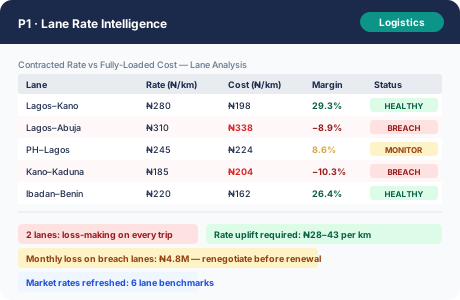
Lane Rate Intelligence
The Problem
Most logistics operators have contracted rates set 12-24 months ago, before the diesel surge. They are running deliveries at a loss on specific lanes without knowing which ones - because nobody has calculated the fully-loaded cost per kilometre against the contracted rate.
What MarginCOS Delivers
Who Uses This
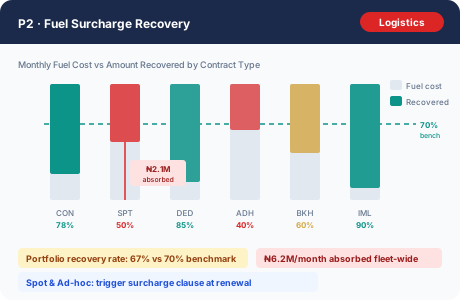
Fuel Surcharge Recovery
The Problem
Diesel costs have surged 63% but most operators absorb the increase into margin rather than triggering contractual fuel surcharge conversations. The gap between what fuel costs and what the contracted rate covers compounds every month it goes unpriced.
What MarginCOS Delivers
Who Uses This
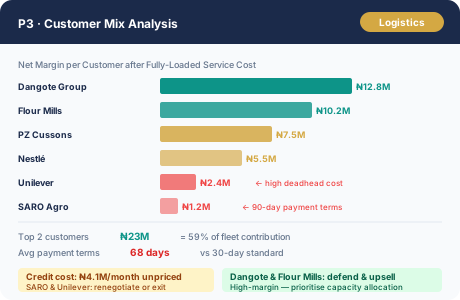
Customer Mix Analysis
The Problem
Revenue per customer looks healthy until dedicated capacity costs, empty return legs, loading time, and credit terms are deducted - revealing that some customer relationships are structurally loss-making regardless of rate.
What MarginCOS Delivers
Who Uses This
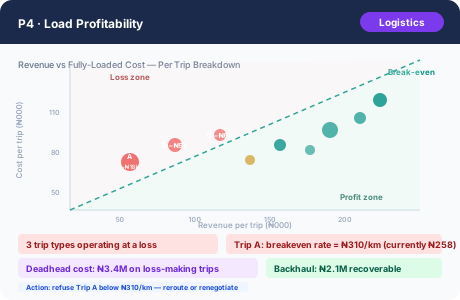
Load Profitability
The Problem
The decision to accept a load is often made on revenue alone. Some loads look good on topline but cost more to service than they earn after fuel, tolls, driver wages, and backhaul deadhead cost. Without per-load profitability visibility, loss-making loads are accepted repeatedly.
What MarginCOS Delivers
Who Uses This
Advanced Intelligence Modules
Enterprise clients access four advanced analytical modules that go deeper - portfolio-level rationalisation, forward scenario planning, commercial spend analytics, and partner performance scorecards. These run on the same data alongside the four core pillars.
Route Rationalisation
Classify every lane into a defend / reprice / exit framework based on margin contribution vs. strategic volume importance.
Fuel Price Scenario Engine
Model diesel price trajectories and stress-test your rate structure - see at what fuel price each lane becomes loss-making and what rate adjustment is needed.
Contract Discount ROI
Calculate the return on every volume discount, dedicated fleet arrangement, and loyalty rate. Surface which terms generate margin and which destroy it.
Customer Profitability Scorecard
Rank every customer relationship by true net margin contribution after capacity, fuel, and credit costs. Identify who to reward, renegotiate, or exit.
See what MarginCOS finds in your logistics operation
Start with a 14-day pilot on your real portfolio data.